
How to Choose Handmade Leather Accessories for College: A Student’s Buying Guide
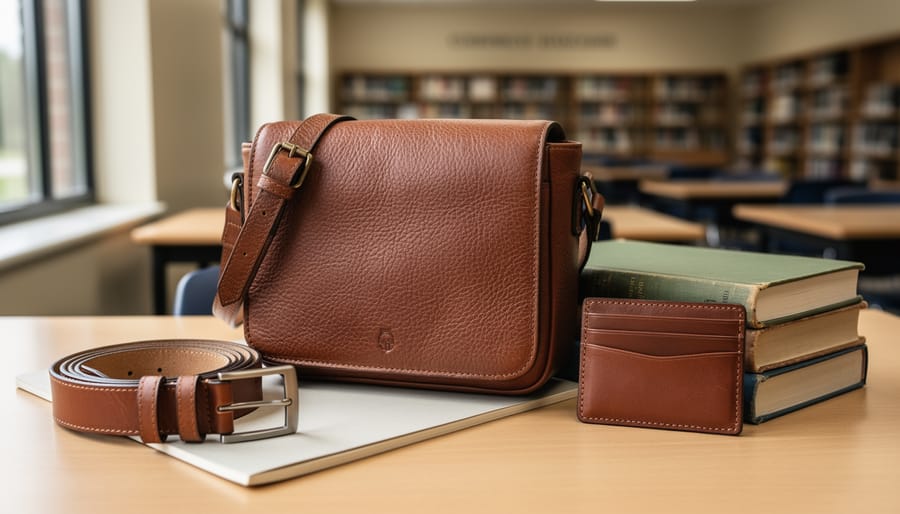
Handmade leather accessories are worth the investment for college fashion when you prioritize versatile pieces that work across multiple outfits, can handle daily wear, and fit into a student-friendly budget between $30 and $150. The smartest approach is choosing classic styles like crossbody bags, belts, and cardholders from independent makers who use full-grain or top-grain leather and offer transparent craftsmanship details. These pieces outlast fast fashion alternatives by years, making them more economical over your college career while helping you develop a signature look instead of chasing trends.
Key Takeaway: Focus on full-grain or top-grain leather for durability, choose multifunctional designs that work for both class and nights out, verify the maker’s process through photos or descriptions, and set a realistic budget that allows for quality without breaking your meal plan fund.
Let’s be real: walking into a lecture hall with a gorgeous leather tote or wearing a handcrafted belt that actually tells a story feels different than carrying another mass-produced bag everyone else has. But figuring out which handmade leather pieces are actually practical for campus life, and which ones will just collect dust in your dorm closet, takes some insider knowledge.
I’ve watched too many friends drop serious cash on leather goods that looked amazing online but fell apart after one semester of being stuffed with textbooks and laptops. The college years are actually the perfect time to start investing in quality accessories because you’re finding your authentic style and building a wardrobe that’ll carry you into your career. The trick is knowing what separates genuinely well-made leather from overpriced pieces that just have a handmade label slapped on them.
This guide breaks down exactly what to look for when shopping for handmade leather accessories as a student, which types deliver the most value for campus life, and how to avoid the mistakes that waste your limited budget. Whether you’re eyeing pieces from local artisans or browsing quality makers like Hat & Skull Art you’ll know how to spot quality and make purchases you’ll still love years from now.
What Makes Handmade Leather Worth It for College Life
Let’s be real, when you’re juggling textbooks, coffee runs, and a part-time job, your accessories take a beating. That leather wallet you shove into your backpack twice a day? It needs to survive way more than a few Instagram-worthy coffee shop visits.
Handmade leather accessories actually make sense for college life because they’re built to last through the chaos. Unlike fast fashion pieces that fall apart after one semester, properly made leather goods get better with age. That crossbody bag that carries your laptop to class will develop character marks that tell your story, not just crack and peel after a few months.
Here’s the thing about budget concerns, yes, a handmade leather wallet costs more upfront than something from a mall chain. But when you break down the cost-per-wear, it’s actually smarter money. A $120 handmade wallet that lasts five years works out to about two cents per day. Compare that to replacing a $30 wallet three times over the same period, and you’re ahead financially while owning something that looks better with time.
Handmade pieces also solve the professional wardrobe problem most of us face in college. You need accessories that work for class presentations and internship interviews without looking like you borrowed them from your parents. A simple leather tote or a classic belt bridges casual and polished effortlessly, which matters when you’re running from biology lab to a networking event.
The durability factor hits different when you’re dealing with Canadian weather too. Handmade leather accessories withstand rain, snow, and the dry indoor heat that destroys cheaper materials. They’re not precious, you can actually use them daily without stress.
Think of it as investing in pieces that grow with you through college instead of buying throwaway items every year. One good leather bag beats five mediocre ones, and your bank account will thank you.
Key Factors to Consider Before You Buy
Leather Type and Quality Indicators
When you’re shopping for leather accessories, the type of leather matters way more than the brand name on the tag. Full-grain leather is the gold standard, it’s the top layer of the hide with all the natural grain intact. It develops that gorgeous patina over time and actually gets better with age, which makes it perfect for college when you need something that’ll look good even after being tossed in your backpack a thousand times. It’s the most expensive option, but it’s legitimately worth it if you can swing the budget.
Top-grain leather is the next step down. The surface gets sanded slightly and finished, so it looks more uniform and polished. It’s still quality stuff and usually more affordable than full-grain, making it a solid middle-ground choice for students. You’ll see it in a lot of well-made accessories that balance price and durability.
Then there’s “genuine leather,” which sounds official but is actually the lowest quality grade marketed as real leather. It’s made from the leftover layers after the good stuff gets separated out. It won’t age well, tends to crack and peel, and honestly isn’t much better than synthetic alternatives.
Here’s how to spot quality when you’re actually shopping: look for leather that feels substantial and slightly irregular, real full-grain has natural texture variations and maybe small marks. If it looks absolutely perfect and plastic-smooth, that’s a red flag. Smell matters too, good leather has an earthy, rich scent, not a chemical one.
Construction and Hardware That Lasts
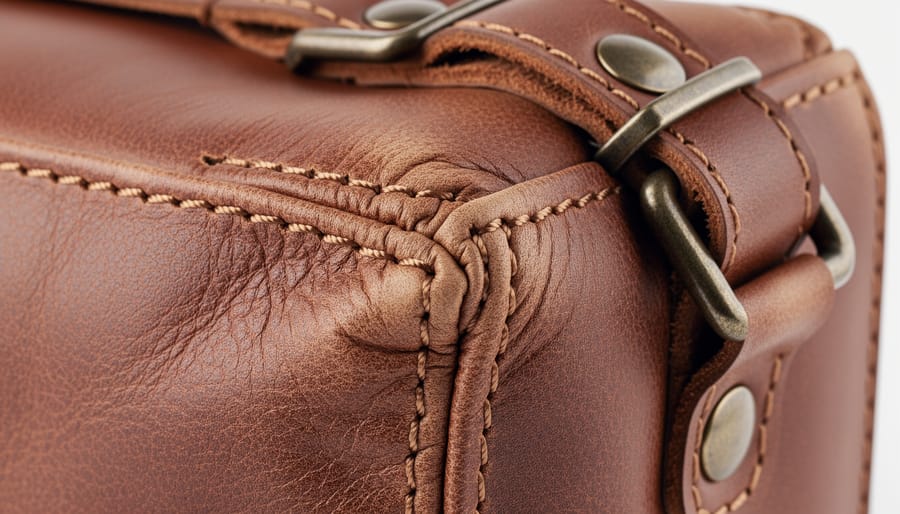
The construction details separate pieces that’ll last through graduation from ones that fall apart by midterms. Start with the stitching, look for tight, even stitches with strong thread. Quality handmade pieces use saddle stitching (two needles working from opposite directions), which holds even if one thread breaks. If you see loose threads, uneven spacing, or gaps, walk away.
Check the edges next. Finished edges should be smooth and sealed, either burnished to a polished shine or edge-painted. Raw, fuzzy edges will fray and look shabby within weeks of daily use. Run your finger along the edge, it should feel smooth, not rough or sharp.
Hardware matters more than most students realize, especially in Canadian weather. Metal zippers, clasps, and buckles should feel substantial and move smoothly. Brass and stainless steel resist rust and corrosion from snow and rain far better than cheap plated hardware. Test everything before buying: open and close zippers several times, snap clasps repeatedly, adjust buckles. Flimsy hardware that barely works in-store will definitely fail when you’re rushing between classes.
The rivets holding straps and handles should sit flush and secure, no wobbling or pulling away from the leather. These stress points take the most abuse when you’re hauling textbooks and laptops.
Budget-Friendly Buying Strategy
Start with one foundational piece rather than trying to build an entire collection at once. A well-made wallet or cardholder offers the best entry point, you’ll use it multiple times daily, it’ll last years, and quality options start around $40-60. This spreads the cost over hundreds of uses, making the math work even on a tight budget.
Shop end-of-season sales at local leather artisans and check their Instagram for sample sales or slightly irregular pieces that function perfectly but have minor cosmetic flaws. Many Canadian makers offer student discounts if you ask, especially at craft markets. Consider a birthday or holiday gift request for your most-wanted investment piece.
Save money on trendy smaller items like keychains or phone cases, these change with your style and don’t need heirloom quality. Put your budget toward the classics you’ll carry daily: that wallet, a simple belt, or eventually a versatile bag. One great piece you actually use beats three mediocre ones collecting dust.
Types of Handmade Leather Accessories Compared
Everyday Bags: Totes, Crossbodies, and Backpacks
Totes work best when you need maximum carrying capacity, think multiple textbooks, a laptop, and your lunch. A structured leather tote in the 14-16 inch range fits a 13-inch laptop comfortably and looks polished for presentations, but it gets heavy fast and offers zero security since everything’s open at the top. Look for reinforced shoulder straps and a flat bottom that stands upright.
Crossbody bags are the campus workhorse. They keep your hands free for coffee and keep your stuff secure in crowded lecture halls or while biking between classes. A medium crossbody (roughly 10×8 inches) holds your wallet, phone, keys, and a slim notebook without weighing you down. The adjustable strap matters here, you want it to sit comfortably whether you’re wearing a t-shirt or a winter coat. This style pairs well with casual outfit tips for everyday campus life.
Leather backpacks combine function with a more grown-up vibe than your high school JanSport. A padded laptop compartment is non-negotiable, and exterior pockets for water bottles actually matter when you’re rushing between buildings. The downside is finding one that doesn’t look stiff or overly corporate, seek out softer leathers that develop character as they age.
Wallets and Cardholders
You’ll likely choose between a traditional bifold wallet and a minimalist cardholder, and both have their place in college life. A full wallet gives you space for cash (still needed for campus food trucks and vending machines), your student ID, health card, debit and credit cards, plus transit passes if your city uses physical cards. The downside? Bulk. They take up more pocket or bag space and can feel cumbersome when you’re just running to class.
Cardholders appeal to students who’ve gone mostly cashless and want something slim that fits in a back pocket or small crossbody. They typically hold four to six cards comfortably, enough for your essentials, but you’ll need another solution for cash and receipts. Consider what you actually carry daily: if you’re constantly digging out loyalty cards, coupons, or coins, a cardholder might leave you frustrated. If you carry the same five cards everywhere, it’s perfect.
Size matters more than you’d think. A cardholder that’s too tight will damage your cards’ magnetic strips and chips over time, while an overstuffed wallet loses its shape and looks sloppy. Look for pieces sized specifically for the number of cards you carry, not maximum capacity.
Belts, Phone Cases, and Small Accessories
These smaller leather pieces might not seem essential, but they’re the finishing touches that pull your whole look together. A handmade leather belt does way more than hold up your jeans, it’s that polished detail that makes casual outfits look intentional. For college, you really only need one good belt in a versatile colour like tan or black. It’ll work with everything from jeans to dress pants for presentations.
Phone cases are where handmade leather really shines over mass-produced options. A quality leather case protects your phone while developing character over time, and it’s something you’ll actually use every single day. Look for designs with card slots, they’re perfect for carrying your student ID and one credit card when you don’t want to bring your whole wallet.
Smaller accessories like leather keychains, cable organizers, or AirPod cases are nice-to-haves rather than must-buys. They’re great as gifts or as ways to slowly build your collection, but focus on the functional pieces first.
Our Top Recommendations for College Students
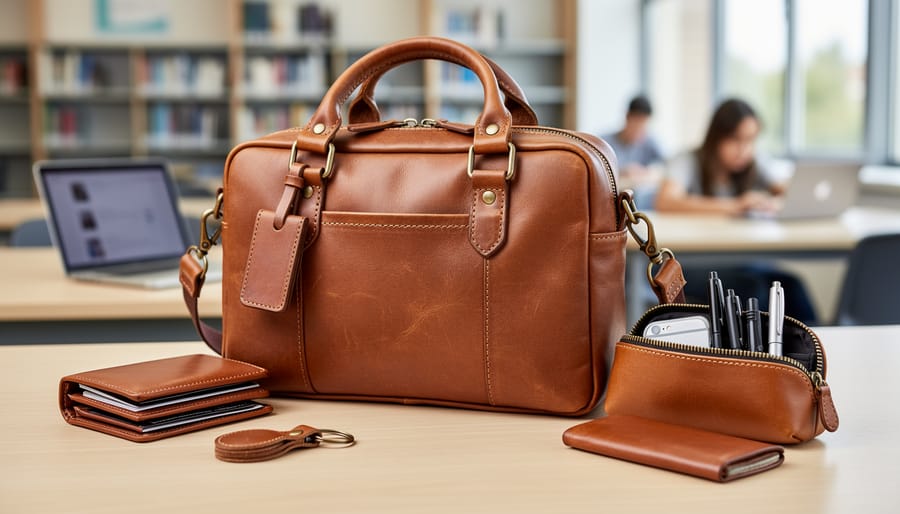
When you’re ready to invest in your first handmade leather piece, start with a classic crossbody bag that works for both campus and nights out. A medium-sized leather crossbody in a neutral colour like cognac or black can carry your laptop, notes, and essentials while keeping your hands free for coffee runs between classes. Look for one with adjustable straps and interior pockets, it’ll serve you through lectures, study sessions at the library, and weekend brunches. Expect to spend $150-250 for quality construction that lasts.
For daily heavy use, nothing beats a full-grain leather cardholder that fits your student ID, transit pass, and a few cards. It slips into any pocket or small bag, develops character as it ages, and eliminates the bulk of a full wallet when you’re rushing across campus. The simpler the design, the longer it stays relevant, skip trendy colours and embellishments in favour of clean lines that could channel Emily in Paris style without trying too hard. Quality cardholders start around $40-60 from independent makers.
If you’re heading into job interviews, co-op placements, or presentations, a structured leather tote in a professional colour makes the right impression. Choose one that holds a 13-inch laptop, has a zip closure (Ontario winters mean you can’t risk an open top), and features reinforced handles. The investment, usually $200-300, pays off when you need to look polished for networking events and it still works for everyday classes.
For the budget-conscious pick that still delivers quality, go with a simple leather belt. A 1.25-inch belt in vegetable-tanned leather costs $50-80 and transforms basic jeans and trousers into put-together outfits. It’s small enough that you won’t stress about wear and tear, but substantial enough that you’ll notice the quality difference from fast fashion alternatives. Plus, a good belt lasts a decade if you treat it right, making it one of the best cost-per-wear investments you can make as a student.
Common Mistakes to Avoid When Buying Leather Accessories
I’ve made some of these mistakes myself, and trust me, they’re way easier to avoid than to fix after you’ve already dropped money on something that doesn’t work for your life. Here are the biggest pitfalls to watch out for when you’re shopping for handmade leather accessories as a college student.
- Chasing trends over timeless style: That ultra-trendy bag shape might be everywhere right now, but will you still want to carry it in two years? Classic designs in neutral colors work with more outfits and don’t date themselves.
- Ignoring the care requirements: Handmade leather needs occasional conditioning and protection from water. If you’re not willing to spend ten minutes every few months maintaining it, you’ll end up with dried-out, cracked leather faster than you think.
- Falling for fake handmade marketing: “Handmade” has become a buzzword. Look for specific details about the maker, their process, and construction methods. Mass-produced items with a “handcrafted” label slapped on are everywhere.
- Prioritizing looks over function: A gorgeous wallet that doesn’t fit your student ID or transit pass will just frustrate you daily. Make sure the piece actually works for your campus routine before you commit.
- Forgetting about Canadian weather: Our winters are harsh. If you buy leather that hasn’t been treated for moisture or a bag without weather-resistant hardware, you’ll watch it deteriorate through one slushy February.
- Buying the cheapest option without checking quality: Not all handmade leather is created equal. Sometimes that suspiciously low price means poor leather quality or weak construction that won’t last past first semester.
Another mistake I see constantly is buying too many pieces at once instead of starting with one quality item and building slowly. Your style and needs will evolve through college, and you’ll get a better sense of what actually works for you after living with one good piece for a semester. Start with the accessory you’ll use most, usually a bag or wallet, and add from there as you figure out your routine and personal style. It’s way better to own two leather pieces you genuinely love and use daily than five that sit in your closet because they don’t quite fit your life.
Caring for Your Leather Accessories in College
Looking after handmade leather doesn’t have to be complicated, even with a packed student lifestyle. The most important habit is simply wiping down your accessories with a soft cloth after heavy use, this removes dirt and oils before they settle into the leather. Keep a small cloth in your bag or desk drawer so it’s always handy.
Every few months, apply a leather conditioner to prevent drying and cracking, especially during harsh Canadian winters when indoor heating pulls moisture from everything. You don’t need expensive products; a basic leather cream from any drugstore works fine. Apply a thin layer, let it absorb for a few minutes, then buff away any excess. This five-minute task keeps your pieces supple and prevents the stiff, cracked look that comes from neglect.
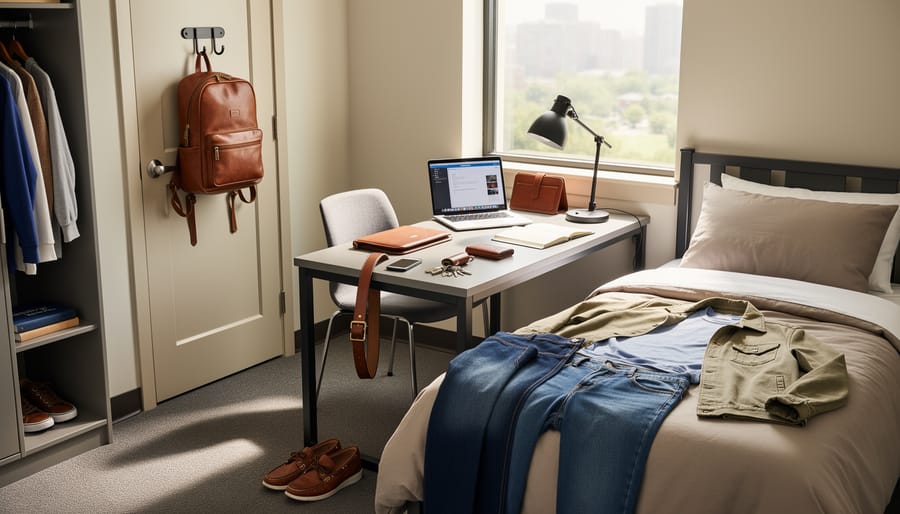
Store your leather accessories properly when you’re not using them. Hang bags on hooks rather than stuffing them into closets where they’ll lose their shape. Keep wallets and smaller pieces in a drawer away from direct sunlight, which fades colour over time. If you get caught in rain or snow, let your leather dry naturally at room temperature, never use a hairdryer or radiator, as rapid heat causes cracking.
For tougher stains or damage, resist the urge to DIY with household products. A professional leather cleaner costs less than replacing a ruined piece.
Reader Questions About Handmade Leather Accessories
I get it. My friends constantly ask me these questions when they see my leather pieces, so let me tackle the big ones that come up every time someone’s thinking about making their first handmade leather purchase.
Is handmade leather really better than what I can get at the mall?
Yes, in ways that matter for college life. Handmade pieces use better leather cuts and construction methods that hold up to daily wear much better than mass-produced accessories. You’re getting something made by a person who cares about the finished product, not a factory churning out thousands of identical pieces with the cheapest materials possible.
How much should I expect to spend as a college student?
Plan on $40-80 for a quality cardholder or small wallet, $80-150 for a good belt, and $150-300 for a bag that’ll last through graduation. These ranges get you genuine handmade pieces from makers who use quality materials without paying luxury brand markups.
Will leather accessories survive Canadian winters?
Good leather handles cold well, but you need to protect it from salt and moisture. Keep a small bottle of leather conditioner in your room and wipe down your bag or wallet after snowy days. Full-grain leather actually gets better with age if you treat it right, developing that rich patina everyone loves.
Can I find ethical and sustainable options?
Absolutely. Many handmade leather makers use vegetable-tanned leather and leather from ethical sources. Look for makers who are transparent about their materials and processes. Buying one well-made piece that lasts five years is inherently more sustainable than replacing cheap accessories every semester.
How do I know if something is really handmade?
Check for slight variations in stitching, hand-burnished edges instead of painted ones, and makers who show their process on social media. Real handmade pieces have small imperfections that prove human hands made them. If everything looks factory-perfect or the price seems impossibly low for “handmade,” it probably is.
Should I buy online or in person?
In person is ideal for your first piece so you can feel the leather quality and see construction details up close. If you’re buying online, look for makers with detailed photos, clear return policies, and customer reviews with actual photos of the products they received.
The biggest thing I wish someone had told me early on is that handmade leather gets better as you use it. Unlike synthetic materials that just wear out, good leather develops character. That wallet you buy in first year can literally improve with age and still look amazing at graduation. The questions you’re asking now show you’re thinking carefully about this purchase, which is exactly the right approach. Trust your gut when something feels too cheap to be true, and don’t be afraid to reach out to makers directly with questions about their process and materials.
Investing in handmade leather accessories isn’t just about having nice things, it’s about building a collection of pieces that grow with you through college and into your career. Unlike fast fashion items that fall apart after a semester, quality leather goods develop character as they age, becoming more uniquely yours with each passing year.
You don’t need to overhaul your entire accessory collection overnight. Start with one versatile piece that fits your daily routine, maybe a crossbody bag that handles your laptop commute or a wallet that’ll survive four years of daily use. Once you experience the difference in quality and durability, you’ll understand why these pieces are worth the investment.
The best part? These accessories don’t look out of place whether you’re heading to class in jeans or interviewing for internships. They’re the foundation pieces that make getting dressed easier and help you look put-together without trying too hard.
We’d love to hear about your favorite handmade leather finds or any questions about choosing pieces for college life. Drop a comment below and let’s keep the conversation going, your experience might help another student make their first smart investment.
Leave a Reply